
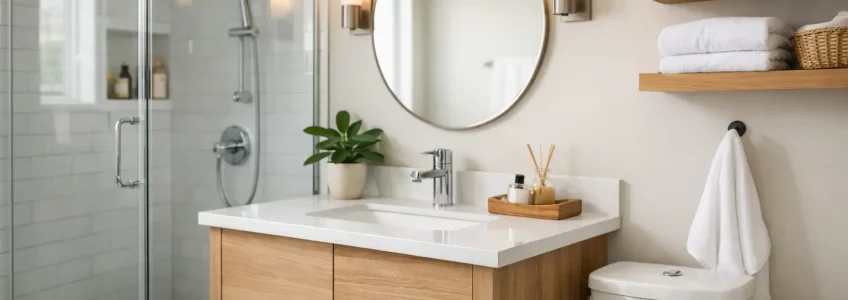
If your bathroom door barely clears the vanity, your towels live on the back of a chair, and every morning feels like a traffic jam, the problem usually is not the square footage alone. It is the layout, the storage, and the choices made around the space. A smart small bathroom remodel can make a tight room feel easier to use every single day without pretending it is bigger than it is.
That is the real goal. Not chasing showroom trends. Not forcing oversized fixtures into a compact footprint. A well-planned remodel should improve movement, storage, lighting, moisture control, and long-term durability. When those pieces come together, even a modest bathroom can feel organized, clean, and high-end.
What a small bathroom remodel should actually fix
A lot of homeowners start with finishes – tile color, faucet style, mirror shape. Those details matter, but they should come after the practical decisions. In a smaller bathroom, every inch has a job to do. If the room still feels cramped after the remodel, the project missed the mark.
The first question is how the bathroom is used. A main family bath has different demands than a powder room or a primary bath. A guest bath may need simple storage and easy cleaning. A daily-use bathroom needs stronger lighting, better organization, and materials that hold up to heavy use. The right remodel is not about copying a photo. It is about solving the problems that frustrate you now.
In many homes, the biggest pain points are predictable. There is not enough storage. The vanity is too bulky. The tub takes up space but rarely gets used. The room feels dark. Moisture lingers too long. Sometimes the layout itself is the issue, and sometimes the footprint is fixed but the fixture choices are working against it.
Layout matters more than size
One of the most valuable parts of a small bathroom remodel is rethinking the layout before selecting materials. Even minor adjustments can improve flow. Shifting a vanity a few inches, changing the door swing, or replacing a tub with a shower can open up space in a way that paint and decor never will.
That said, layout changes come with trade-offs. Moving plumbing can add cost. In some homes, joists, vent stacks, or existing walls limit what makes sense. The best remodels balance improvement with practicality. If a full reconfiguration is not worth the budget, strategic upgrades within the current footprint can still deliver a major difference.
A floating vanity, for example, creates more visible floor area and makes the room feel less crowded. A pocket door can improve clearance if wall conditions allow it. A walk-in shower with clear glass often feels lighter than a shower curtain cutting the room in half. These are not gimmicks. They are functional decisions that change how the space works.
The fixtures that make a small bathroom feel bigger
Scale is everything in a compact bathroom. Oversized vanities, deep linen towers, or wide trim profiles can make the room feel crowded fast. Choosing fixtures designed for smaller spaces usually creates a cleaner result.
Vanities are a good place to start. If you need more storage, it is tempting to go larger, but depth can matter more than width. A shallower vanity can improve walk space without sacrificing much function, especially if drawers are better organized than the old cabinet. Wall-mounted faucets can also free up a little counter area when every inch matters.
Toilets are another overlooked opportunity. Compact projection models can save space in front of the bowl, which helps in narrow bathrooms. For showers, frameless or low-profile glass can keep sightlines open. If privacy is a concern, textured glass may be a better fit than fully clear panels.
A tub-to-shower conversion is often one of the highest-impact moves in a small bathroom remodel, especially when the tub is rarely used. It can make the room easier to enter, easier to clean, and more comfortable for daily routines. But it depends on the home. If this is the only tub in the house, resale considerations may matter. Families with young children often want to keep at least one.
Storage has to be built in, not added later
In a small bathroom, storage cannot be an afterthought. Decorative baskets and over-the-toilet racks can help, but they usually look like what they are – workarounds. Built-in storage gives the room a more finished feel and keeps essentials where they belong.
Recessed medicine cabinets are one of the smartest upgrades because they add hidden storage without taking up floor space. Shower niches do the same thing inside the wet area, reducing clutter from caddies and bottle racks. Vanity drawers with organizers work better than deep cabinets where everything gets stacked and lost.
If the wall space allows it, a narrow recessed shelving section can create room for towels or toiletries without making the bathroom feel boxed in. Even simple details like hooks placed in the right spot can reduce clutter and improve daily use. Good storage is not just about fitting more in. It is about making the room easier to maintain.
Materials should handle moisture and wear
Bathrooms are hard on finishes, and small bathrooms can be even tougher because steam, splashing, and daily use are concentrated in a tighter area. That is why material selection should focus on durability first, then style.
Porcelain tile remains one of the best choices for floors and shower walls because it stands up well to moisture and wear. The look can range from clean and modern to warm and classic, depending on the tile size and pattern. Large-format tile can reduce grout lines, which helps with cleaning and can make the room feel more open. But in very small spaces, the layout has to be planned carefully so cuts do not look awkward.
For countertops, quartz is a strong choice for many homeowners because it is durable and low maintenance. Painted cabinetry can look sharp, but the quality of the finish matters in a humid environment. Ventilation matters too. Even the best materials will not perform well if moisture is not being removed properly.
This is where professional installation matters. Tile work, waterproofing, transitions, and ventilation are not cosmetic details. They affect how the bathroom performs over time. A clean-looking remodel can still fail if water management is handled poorly.
Lighting changes everything
A small bathroom with weak lighting will always feel tighter than it is. Good lighting improves function, but it also changes how materials, colors, and proportions read in the room.
Layered lighting works best. Overhead lighting handles general illumination, while vanity lighting helps with grooming tasks. In many bathrooms, side-mounted sconces or a properly placed vanity fixture reduce shadows better than a single ceiling light. If there is any natural light, the remodel should protect it rather than block it with heavy treatments.
Mirrors can help amplify brightness, especially when they reflect a window or a well-placed light source. Lighter finishes also help, but this does not mean everything has to be bright white. Warm neutrals, soft grays, natural wood tones, and balanced contrast can all work well. The key is keeping the palette controlled so the room feels intentional instead of busy.
Budget where it counts
Not every part of a bathroom deserves the same investment. In a small bathroom remodel, the smartest budget is usually the one that prioritizes waterproofing, tile installation, plumbing fixtures, ventilation, and cabinetry function before decorative extras.
That does not mean style should take a back seat. It means the most visible elements should also be the most durable. A cheaper faucet that fails early is not a savings. Neither is a low-cost shower build that develops moisture issues behind the wall.
If budget is limited, it often makes sense to keep plumbing locations where they are and spend more on workmanship and materials within that layout. Custom features can be worth it, but only if they solve a real problem. Built-in storage usually does. A trendy finish that feels dated in two years usually does not.
For homeowners planning a remodel in the Twin Cities, working with an experienced contractor matters even more in older homes where walls are rarely perfectly square and hidden issues can show up once demolition starts. A clear scope, honest pricing, and strong installation standards protect the investment. That is one reason homeowners turn to A to Z Construction for bathroom renovation work that balances craftsmanship, durability, and day-to-day function.
A better bathroom should feel easier to live with
The best remodels are not the ones that try to fool you into thinking a small bathroom is huge. They are the ones that make the room work so well that you stop noticing the limits. Better storage. Better lighting. Better flow. Better materials in the places that matter.
If your current bathroom feels cramped, outdated, or hard to maintain, the right remodel can change that without wasting space or money. Start with what is not working, build around how the room is actually used, and make choices that will still make sense years from now. A smaller room leaves less margin for error, but when it is done well, it can be one of the most satisfying upgrades in the house.