
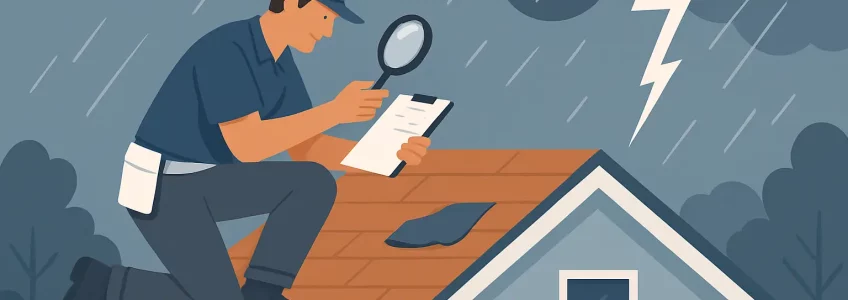
You hear the hail hit, or you watch shingles lift in a wind gust, and the next morning everything looks…fine. That is exactly how storm damage turns into expensive surprises. In Minnesota, a roof can take a hit that does not show up from the driveway, then weeks later you find a leak, a stained ceiling, or shingles sliding out of place.
A free roof inspection after storm events is the simplest way to replace uncertainty with real information. Done correctly, it documents what happened, protects your insurance options, and helps you plan repairs on your timeline instead of the weather’s.
Why a free roof inspection after storm damage is worth doing
Storm damage is not always dramatic. Hail can bruise a shingle without puncturing it. Wind can break the seal strip and lift edges that settle back down, leaving the roof vulnerable to the next gust. Even if you never get a drop of water inside, the roofing system may have lost years of service life overnight.
A professional inspection gives you three things you cannot get from a quick look: clarity, documentation, and leverage. Clarity tells you whether you are dealing with cosmetic scuffs, repairable issues, or a roof that is no longer doing its job. Documentation matters if you decide to file a claim because photos and notes taken close to the storm date are harder to dispute later. Leverage means you can make decisions from a position of proof, not pressure.
There is also a practical Minnesota reason to move quickly. Our roofs often face back-to-back weather. A roof that is “mostly fine” after the first storm can become the reason your attic gets soaked in the next one.
What a real post-storm roof inspection includes
Not all inspections are equal. A helpful inspection is systematic, photo-backed, and focused on the full roofing system, not just the shingle surface.
Exterior roof surface and field conditions
An inspector should look for hail bruising, granule loss, exposed fiberglass mat, fractured laminate, and soft spots that indicate impact. With wind, the focus shifts to missing shingles, lifted edges, creased shingles, and broken seal lines. On steeper roofs, damage patterns can vary by slope depending on wind direction and where hail struck hardest.
Flashing, penetrations, and edge details
Most leaks begin at transitions, not in the middle of a shingle. A proper inspection checks step flashing at sidewalls, chimney flashing and counterflashing, roof-to-wall details, plumbing vents, furnace stacks, skylights, and pipe boots. Drip edge, rakes, and eaves get special attention because wind often starts there.
Gutters, downspouts, and soft metals
Dents in gutters, downspouts, and metal vents can support a hail story, but they are not proof your shingles are damaged. Still, these components matter because they control water. Loose fasteners, separated joints, or clogged areas can send water where it does not belong.
Attic and interior indicators
If the contractor offers attic checks, that is a plus. Water staining, moldy sheathing, damp insulation, and daylight showing through are high-value clues. Even when you do not see stains on your ceiling, the attic may reveal early issues.
A good inspector should be comfortable saying, “You have damage, but it may not justify a full replacement,” or, “This area can be repaired,” or, “This roof has enough storm-related failures that replacement is the smarter long-term move.” It depends on roof age, existing wear, and how widespread the damage is.
When to schedule an inspection after a storm
Sooner is usually better, but there are trade-offs. Immediately after a major event, contractors can be booked out and some roofs are not safe to walk due to debris, slick surfaces, or ongoing high winds. If conditions are unsafe, a reputable company will not force it.
In most cases, aim for an inspection within days to a couple of weeks. That window keeps the storm date fresh for insurance purposes and gives you time to address minor repairs before another rain. If you already have an active leak, that becomes a same-day priority because water damage compounds fast.
If you are unsure whether the storm was “bad enough,” consider this rule of thumb: if you had hail large enough to rattle windows, or wind strong enough to move patio furniture, it is worth checking. Roof damage is not always proportional to what your street looks like.
What to do before the inspector arrives
You do not need to prep like it is a remodel, but a few simple steps make the inspection smoother and more accurate.
If you can do it safely, walk your property and take wide photos of each side of the home, plus any visible damage to gutters, vents, siding, window screens, or outdoor AC fins. Inside, snap photos of any ceiling stains, bubbling paint, or damp drywall. Then gather basic info: the approximate age of the roof, any previous repairs, and the date and time of the storm.
Avoid going on the roof yourself. Aside from safety, you can accidentally cause damage that complicates a claim. Insurance adjusters and contractors are trained to separate storm impacts from foot-traffic marks.
Insurance claims: where homeowners get stuck
Storm restoration gets stressful when the insurance process becomes unclear. A free roof inspection after storm damage can be helpful here, but only if you understand the sequence.
First, you want documentation that supports what happened, where it happened, and how it affects roof function. Second, you want a contractor who can explain what is repairable versus what typically gets replaced under policy guidelines. Third, you need to keep your decisions grounded in your policy, not a one-size-fits-all script.
It also depends on your roof type and policy language. Some policies factor depreciation heavily based on roof age. Others separate cosmetic versus functional damage, which matters for metal roofing and soft metals. A trustworthy contractor will talk through those realities without promising outcomes they cannot control.
If you do file a claim, timing matters. Report it within your insurer’s allowed window, keep your documentation organized, and do not authorize full replacement work until the scope and pricing are clear. Emergency tarping or temporary repairs may be appropriate to prevent further damage, but permanent work should align with an agreed scope.
Red flags to watch for after storms
Storms bring out legitimate local professionals and opportunists. Minnesota sees plenty of both, especially after widespread hail.
Be cautious if someone offers “free roofs,” pressures you to sign immediately, or says they can waive your deductible. Deductible waivers can create legal and coverage issues, and they often lead to corners being cut.
Also be wary of inspections that are all talk and no proof. If you do not get photos, clear notes, and a straightforward explanation, you are not really getting an inspection. You are getting a sales pitch.
Finally, do not underestimate the value of licensing, insurance, and manufacturer credentials. These are not just badges. They typically indicate training standards, installation requirements, and accountability if something goes wrong.
What happens after the inspection
Once you have the findings, you generally end up in one of three lanes.
If there is no meaningful storm damage, you gain peace of mind and can plan normal maintenance. If there is localized damage, a repair may buy you time, especially on a newer roof where the rest of the system is performing well. If the damage is widespread or the roof is already near the end of its service life, replacement is often the most cost-effective path because patching can become repetitive and hard to warranty.
For replacement projects, ask about the full roofing system, not just shingles. Underlayment, ventilation, ice and water protection, flashing details, and attic airflow all play a role in durability. In Minnesota, that “system thinking” is what separates a roof that looks good from a roof that survives the next decade of freeze-thaw cycles, ice dams, and high winds.
If you need help navigating storm repairs and the insurance process, A to Z Construction offers free inspections and handles exterior restoration with a claims-advocacy mindset, backed by certifications and a quality-first approach.
The smartest mindset after a storm
Most homeowners are not trying to become roofing experts. You just want to know whether your home is protected and whether you are about to face a major expense.
Treat a post-storm inspection like you would treat a check-engine light. Maybe it is nothing. Maybe it is a small fix. Or maybe it is an early warning that saves you from bigger damage later. The goal is not to panic. The goal is to replace guesswork with a clear, documented plan so your roof is ready for whatever Minnesota sends next.
Let the storm be the loud part. Your next step can be calm and deliberate.