
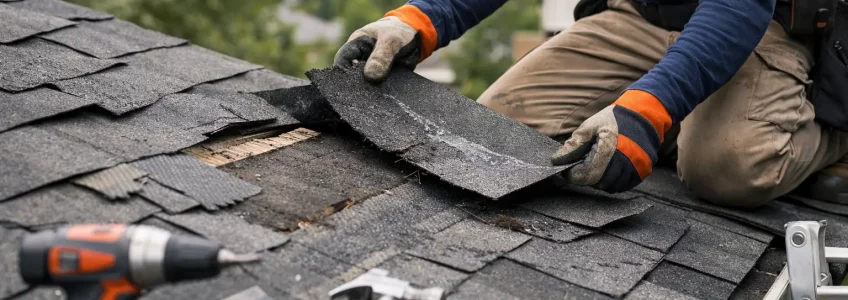
A roof can look fine from the driveway and still be one storm away from leaking. That is the problem with wind damage. It does not always leave behind a dramatic hole or a tree branch through the shingles. More often, it loosens edges, breaks seals, lifts tabs, and creates weak points that let water in later.
For homeowners, that delay is what makes wind damage roof repair so easy to underestimate. The storm passes, life gets busy, and the real trouble shows up weeks later as a ceiling stain, mold in the attic, or decking that has already started to rot. Fast action matters, but so does doing the repair the right way.
What wind actually does to a roof
Wind rarely damages a roofing system in just one way. On asphalt shingle roofs, strong gusts can lift shingles and crease them. Once a shingle is creased, it has lost integrity. It may lie flat again, but it is no longer performing the way it should. Wind can also break the seal strip that helps shingles resist future gusts, which makes the next storm even more likely to cause larger sections to peel back.
Metal roofing systems hold up well in many conditions, but they are not immune. Wind can loosen fasteners, stress panel connections, or affect trim and flashing at edges and transitions. On any roof type, the perimeter is often the first place to fail. Ridge caps, flashing, soffit, fascia, gutters, and vents can all take a hit before the main field of the roof shows obvious damage.
That is why a proper inspection matters. A quick glance from the ground is not enough to tell whether your roof needs a small repair, a larger section replacement, or a full insurance-supported restoration.
Signs you may need wind damage roof repair
Some signs are obvious. Missing shingles, bent flashing, exposed underlayment, or pieces of roofing material in the yard usually mean you should schedule an inspection immediately. Other signs are more subtle.
You may notice shingle tabs that look uneven, corners that appear lifted, granules collecting in gutters, or water spots forming in upper-floor ceilings. In the attic, daylight near roof penetrations or damp insulation can point to storm-related openings. Even a gutter pulling away from the fascia can be a clue that wind stressed the roof edge.
The tricky part is that not every damaged roof leaks right away. A compromised shingle can still shed light rain for a while. Then a heavier storm, ice backup, or wind-driven rain pushes water beneath the surface and turns a repairable issue into interior damage.
Why timing matters more than most homeowners think
Waiting can raise the cost of the repair and complicate insurance. If wind damage is documented soon after the storm, it is easier to connect the loss to a specific weather event. If months pass, insurers may ask harder questions about maintenance, age, and whether later deterioration contributed to the problem.
There is also the practical side. A single lifted shingle can expose the layers beneath it to sun, water, and repeated freeze-thaw cycles. In Minnesota, that weather pattern is hard on roofing materials. What starts as a targeted repair can become a decking issue, an insulation issue, or a mold issue if water gets trapped long enough.
Prompt inspection does not always mean a full replacement is needed. In many cases, early action gives you more options and lower costs.
Repair or replacement? It depends on the damage
This is where honest assessment matters. If the wind damage is limited to a small area and the surrounding shingles are still in good condition, a repair may be the right call. Replacing damaged shingles, securing flashing, resealing vulnerable sections, and correcting edge damage can restore performance without replacing the entire roof.
But there are trade-offs. If the roof is older, if shingles are brittle, or if matching materials is difficult, a spot repair may not hold up as well or blend visually with the rest of the roof. If wind damage is spread across multiple elevations, if there are signs of widespread seal failure, or if code-related requirements are triggered, replacement may make more sense.
The right answer should come from the condition of the full roofing system, not just the most visible damage. That includes shingles or panels, underlayment, flashing, ventilation, decking condition, and the edges where roofs often fail first.
What a professional inspection should include
A useful inspection does more than confirm that damage exists. It should identify where the damage started, how far it extends, and whether related components were affected. That means checking shingles or metal panels, valleys, flashing, vents, ridge caps, gutters, soffit, and fascia, along with the attic if accessible.
Photos matter. Documentation matters. If an insurance claim may be involved, the inspection should clearly show storm-related damage and not just general wear. Homeowners are often frustrated because the claims process can feel technical and adversarial at the exact moment they need straightforward answers.
That is one reason many property owners prefer working with a contractor who understands restoration and insurance documentation, not just installation. A to Z Construction has built its reputation on that hands-on approach, helping homeowners move from inspection to scope review to completed repairs with less stress and fewer surprises.
How insurance fits into wind damage roof repair
Insurance coverage depends on your policy, the age and condition of the roof, and the documented cause of loss. In many cases, sudden wind damage is covered, while long-term neglect is not. That sounds simple, but real claims are rarely that clean.
A roof can have normal aging and storm damage at the same time. The question becomes whether the storm created functional damage that affects performance. Creased shingles, broken seals, missing tabs, damaged flashing, and compromised ridges can all be relevant. Good documentation helps separate storm impact from ordinary wear.
Homeowners should also know that the first insurance outcome is not always the final one. If the initial scope misses important damage, additional documentation may support a revised approval. That is why having an experienced contractor involved early can make a real difference. The goal is not to inflate a claim. It is to make sure the damage is properly identified and the repair scope actually restores the property.
What quality repair work looks like
Good wind repair is not just replacing what blew off. It is restoring the system so it performs as a system again. That means addressing underlayment if it was exposed, replacing damaged flashing instead of trying to reuse bent pieces, checking adjacent shingles for creases or broken seal strips, and making sure ventilation components are still secure and weather-tight.
It also means protecting the property during the work, using materials that meet manufacturer standards, and matching the existing roof as closely as possible when a partial repair is appropriate. On some roofs, especially older ones, a color match will be imperfect even with the correct product line. A trustworthy contractor should say that clearly upfront.
Credentials matter here. Licensed, insured contractors with manufacturer certifications and a track record of exterior restoration are better positioned to deliver repairs that meet both code requirements and product installation standards. That protects your home now and helps avoid callbacks later.
Choosing the right contractor after a wind event
Storm season brings out a lot of temporary roofing companies. Some do solid work. Some disappear as fast as they arrive. When you are dealing with possible wind damage roof repair, local accountability matters.
Look for a contractor with a real service history, clear insurance knowledge, and the ability to explain whether repair or replacement is the better option for your specific roof. Ask how they document damage, how they protect landscaping and exterior surfaces during construction, and whether they handle communication tied to claim scope and supplements when needed.
You also want direct answers on pricing, timelines, and what happens if additional damage is found once materials are removed. The best contractors are not vague. They are thorough.
Don’t wait for a leak to make the decision for you
If your area has had recent high winds and your roof is more than a few years old, an inspection is a smart next step even if everything looks normal from the ground. Wind damage has a way of hiding until it becomes more expensive.
A roof does not need to be falling apart to need attention. Sometimes it just needs someone qualified to catch the small failures before they turn into major repairs. A free inspection now can protect your home, support a valid insurance claim if needed, and give you a clear path forward without the guesswork.
When a storm tests your roof, the goal is not just to patch what is visible. It is to restore confidence that your home is protected the next time the wind picks up.