A shower that looks fine from across the room can still be letting water behind the tile every single day. That is what makes shower problems expensive – not always the visible crack or loose tile, but the hidden moisture working its way into drywall, framing, and subfloor.
If you are weighing tile shower repair options, the right choice depends on one question first: is the problem cosmetic, or is the shower system failing? That distinction matters because some issues can be repaired quickly and affordably, while others need more than a patch to stop ongoing damage.
How to tell which tile shower repair options you actually need
Homeowners often notice the surface symptoms first. A cracked grout line, soft caulk, a loose tile, staining near the base of the shower, or water showing up outside the curb can all point to very different underlying problems.
When the shower pan, waterproofing, or wall substrate has been compromised, replacing grout alone will not solve it. On the other hand, if the waterproofing is intact and the issue is isolated, a targeted repair may be the smartest use of your budget.
A good inspection usually starts with a few practical questions. Is the damage limited to one area? Has the shower leaked outside the enclosure? Do tiles feel loose under hand pressure? Is there a musty smell that keeps coming back? Does the floor feel soft nearby? The answers help determine whether you are looking at maintenance, repair, or partial replacement.
Option 1: Regrouting and recaulking
This is the most straightforward fix, and in the right situation, it works well. Grout can crack over time as homes shift, surfaces expand and contract, and everyday use wears down the joints. Caulk at corners and transitions also breaks down faster than many homeowners expect.
If the tile itself is sound and there is no evidence of water getting behind the assembly, regrouting and recaulking can restore the appearance of the shower and tighten up vulnerable joints. This is often a good option for showers that are older but still structurally solid.
The trade-off is that grout and caulk are not a substitute for waterproofing. If water is already getting behind the tile, fresh grout may make the shower look better for a while without addressing the real problem. That is why this option makes the most sense when the issue is truly surface-level.
Option 2: Replace a few damaged tiles
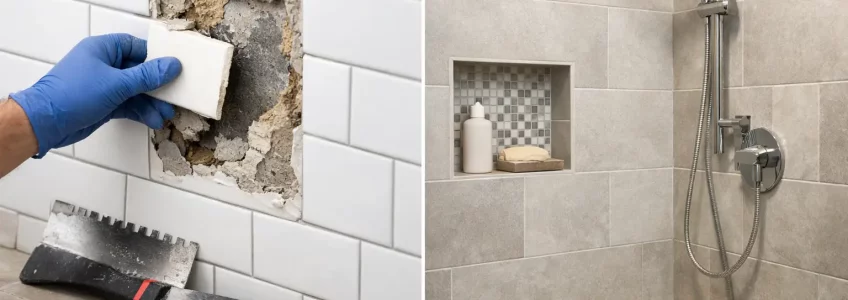
Sometimes the problem is local. A dropped shower head, movement in one section of wall, or an isolated installation defect can leave you with one or several cracked or loose tiles. If the surrounding area is dry and secure, replacing only the damaged tiles may be enough.
This repair can be cost-effective, especially when matching tile is still available. It also helps prevent water from reaching the substrate through open cracks or missing grout lines.
The challenge is that tile removal has to be done carefully to avoid damaging neighboring pieces. There is also the question of what is underneath. If the backer board is soft, moldy, or deteriorated, the repair may need to expand. A small tile replacement can turn into a larger wall repair once the surface is opened up, and an honest contractor should say that upfront.
Option 3: Repair the shower floor or pan area
Problems near the floor deserve extra attention because gravity sends water there all day long. Loose floor tile, persistent staining, failed grout around the drain, or water escaping at the curb can point to a pan issue rather than a simple tile problem.
In some cases, the floor tile can be removed and rebuilt while leaving most wall tile in place. That can be a practical middle-ground option when the walls are in good shape but the base of the shower is no longer performing. It is more involved than cosmetic repair, but less disruptive than a full replacement.
That said, pan repairs are only worth doing if the tie-in between the floor waterproofing, drain, and lower wall system can be corrected properly. If those components were installed poorly from the start, partial work may only delay a bigger project.
Option 4: Partial demolition and rebuild
This is often the best answer when the damage is real but contained. Maybe one wall has moisture damage from a plumbing leak. Maybe the lower section of the shower has failed while the upper area remains dry. In these situations, selective demolition can remove compromised material and rebuild the affected area with proper waterproofing.
Partial rebuilds require judgment. Done well, they preserve what is still sound and avoid unnecessary cost. Done poorly, they create weak points where old and new systems meet. That is why this option depends heavily on the condition of the existing shower and the skill of the installer.
For homeowners trying to balance budget and long-term value, this can be one of the more sensible tile shower repair options. You are not paying for a full remodel if you do not need one, but you are also not gambling on a surface fix when the wall cavity has already been exposed to moisture.
Option 5: Full shower replacement
There are times when repair stops making financial sense. If multiple walls are affected, the shower pan is failing, water has reached framing or subfloor, or the original installation never had reliable waterproofing, a full replacement is usually the safer investment.
This is especially true in older bathrooms where you may already be dealing with outdated tile, recurring leaks, and materials that are nearing the end of their service life. Rebuilding the shower gives you the chance to correct the waterproofing system, improve drainage, update finishes, and avoid piecemeal spending that adds up fast.
A full replacement costs more upfront, but it can be the most cost-effective option over time when repeated repairs would still leave you with an unreliable shower. For many homeowners, the deciding factor is peace of mind. Once hidden moisture becomes part of the picture, confidence in the shower matters as much as appearance.
What drives the cost of tile shower repairs
Repair pricing depends less on the tile you can see and more on the conditions you cannot. Access, demolition, drying time, material matching, substrate damage, waterproofing needs, and plumbing adjustments all affect the scope.
A simple grout and caulk refresh is obviously far less expensive than rebuilding a shower base. But there is a middle range where many projects land, especially when removing damaged tile reveals wet backer board or framing that needs to be dried and replaced.
This is why low quotes can be misleading. If a contractor prices only the visible symptom without addressing the assembly behind it, the repair may not last. Honest pricing should reflect the actual condition of the shower and the work needed to fix it correctly.
When repair is worth it and when it is not
A repair is usually worth it when the problem is isolated, the waterproofing remains intact, and the rest of the shower has useful life left. In those cases, targeted work can extend the life of the space without pushing you into a full remodel.
Repair is usually not worth it when leaks have been recurring, mold or softness is present, multiple surfaces are failing, or previous patch jobs have already been tried. At that point, you are often paying to revisit the same issue instead of solving it.
For homeowners in the Twin Cities, this decision also ties into long-term home value. Bathrooms matter to buyers, but reliability matters even more. A clean-looking shower that still leaks behind the scenes is not saving money. It is postponing cost.
Choosing a contractor for tile shower repair options
Shower repair is not just tile work. It involves moisture management, waterproofing, substrate preparation, finish installation, and sometimes plumbing coordination. That is why experience matters.
Look for a contractor who is fully licensed and insured, explains what is causing the problem, and can tell you where repair ends and replacement begins. You want clear communication, honest pricing, and a plan that protects the rest of the bathroom, not just the visible tile surface.
A company with remodeling experience can also help if the project grows once demolition starts. That matters because shower issues do not always stay small. The right team is prepared for both the repair you expected and the hidden damage you hoped was not there.
At A to Z Construction, that practical approach is a big part of how bathroom and shower projects are handled – fix what can be fixed, and recommend replacement only when it is truly the better long-term call.
If your shower has started showing cracks, loose tile, or signs of leaking, the best next step is not guessing between repair products at the store. It is getting a clear assessment of what is happening behind the tile so you can make a decision that protects your home, your budget, and your peace of mind.