
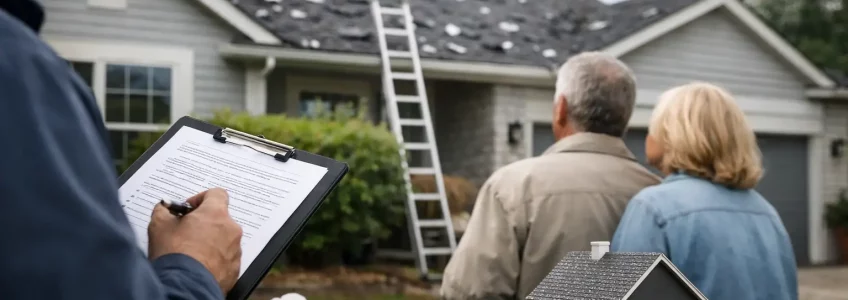
A hailstorm can be over in twenty minutes and leave you dealing with months of paperwork, inspections, and second-guessing. The hardest part for many homeowners is not spotting the dents on the roof or the granules in the gutter. It is figuring out what to do next without making an expensive mistake.
If you are looking for hail damage insurance claim help, the goal is simple: protect your home, protect your claim, and avoid getting pushed into a rushed decision. That takes a clear process and the right contractor support from the start.
What to do first after a hailstorm
The first step is not filing the claim. It is documenting what happened and checking for obvious signs of damage. If it is safe, walk around your property and take photos of anything you can see from the ground. Look for dented gutters, damaged downspouts, torn window screens, bruised siding, cracked trim, and pieces of shingle on the ground. If your car was outside, hail marks on the hood or roof can also support the fact that the storm was severe in your area.
What you should not do is climb on the roof yourself or assume that no leak means no damage. Hail damage often shortens the life of a roof before it causes immediate water intrusion. Asphalt shingles can lose granules, crack, or bruise in ways that are easy to miss without a trained inspection.
A professional roof and exterior inspection gives you a much stronger starting point than a guess. It tells you whether the damage appears cosmetic, functional, or widespread enough to justify a claim. That matters because not every storm should lead to filing one.
When filing a claim makes sense
This is where good hail damage insurance claim help can save homeowners from unnecessary frustration. Filing a claim is not automatically the right move every time hail hits your neighborhood.
If the damage is minor and falls close to your deductible, a claim may not provide much benefit. If the roof is older, there may also be policy language about depreciation, actual cash value, or limited roof surface coverage that changes the math. On the other hand, if hail damaged shingles, metal components, siding, gutters, windows, or multiple elevations of the home, filing a claim is often the practical path.
A reputable contractor should be willing to explain that difference. If someone is telling you to file before they have done a careful inspection, that is a red flag. The right approach is inspection first, then a claim decision based on evidence.
How the insurance claim process usually works
Once damage is confirmed, the insurance process tends to follow a familiar pattern. You contact your carrier, report the date of loss, and open a claim. The insurer then schedules an adjuster inspection to review the property.
This is the point where homeowners often feel outmatched. Insurance documents are full of line items, scope notes, depreciation rules, and repair categories that are not obvious unless you work with them regularly. A missed item on the initial scope can leave you paying out of pocket later unless it is documented and supplemented properly.
A contractor with insurance-claim experience can meet the adjuster, walk the property, and help make sure all storm-related damage is identified. That does not mean the contractor decides coverage. The carrier does that. But it does mean the adjuster is less likely to overlook damaged accessories, code-related items, or connected exterior components that need to be addressed.
After the inspection, the insurer sends an estimate or scope of loss. This document outlines what they are willing to pay for, less your deductible and any depreciation holdback. If the scope is accurate and complete, repairs can move forward. If something is missing, your contractor may submit documentation to request supplements.
Why homeowners run into claim delays
Most claim problems are not caused by one big issue. They come from a series of small gaps.
Sometimes the photos are weak. Sometimes the date of loss is vague. Sometimes the roof has legitimate hail damage, but no one documents the siding, soft metals, window wraps, or gutter impacts that support the storm pattern. In other cases, the adjuster and contractor simply are not working from the same information.
Timing matters too. Insurance policies often require prompt notice of damage, and Minnesota weather does not wait for paperwork. If a compromised roof sits too long, secondary damage can make the situation more complicated. Homeowners are expected to prevent further damage when they reasonably can, which may include temporary protection measures while the claim is being reviewed.
The smoother claims tend to have three things in common: a thorough inspection, organized documentation, and a contractor who knows how to communicate clearly with both the homeowner and the carrier.
Hail damage insurance claim help that actually helps
Useful claim support is not about making bigger promises. It is about reducing confusion and keeping the process grounded in facts.
A strong contractor will explain what they found, show you the damage, and help you understand whether it appears insurable. They will review the insurance scope with you in plain language, point out missing items when they exist, and coordinate scheduling so repairs happen in the right order. If your roof, siding, gutters, windows, or fascia were all affected, that coordination matters. Storm restoration is rarely just one trade.
This is especially valuable for homeowners who do not want to manage separate crews, argue over scope details, and chase updates from multiple parties. Working with one experienced contractor can make a stressful claim feel manageable instead of chaotic.
That is one reason many property owners across the Twin Cities look for a company that handles both exterior restoration and insurance coordination. A to Z Construction has built its reputation around that kind of practical support, backed by licensed and insured workmanship and local experience with storm-related repairs.
Watch out for storm-chasing sales tactics
After a major hail event, neighborhoods fill up fast with out-of-town crews knocking on doors. Some are legitimate. Many are not. The problem is not just poor workmanship. It is poor accountability.
A contractor who shows up right after a storm, pressures you to sign immediately, or promises they can cover your deductible should make you pause. So should vague paperwork, no local office, or refusal to provide proof of licensing and insurance. If problems show up months later, these companies are often gone.
A local contractor has more at stake. They rely on community trust, reviews, referrals, and long-term service. They also understand regional weather patterns, local code expectations, and the reality of scheduling repairs around Minnesota seasons. That does not guarantee perfection, but it usually leads to better communication and better follow-through.
It depends on your policy and your roof
Homeowners often want a simple answer to a simple question: will insurance pay for a new roof? Sometimes yes. Sometimes no.
It depends on the extent of the damage, your policy terms, your deductible, the age and condition of the roof, and whether the carrier sees functional damage or only cosmetic marking. Metal roofing, asphalt shingles, siding, and accessory components can all be treated differently depending on the policy language.
That is why broad promises are not helpful. An honest contractor should tell you where things look strong, where there may be challenges, and what questions to ask your carrier. Confidence is good. Accuracy is better.
Before repairs start, make sure the scope is complete
One of the most common homeowner frustrations happens after claim approval, when the repair crew starts and discovers items that were not included in the original insurance estimate. That can involve flashing, ice and water barriers, drip edge, code-required upgrades, detached accessories, or matching issues on siding and roofing elevations.
Some of those items can be addressed through supplements, but it is easier when the contractor is reviewing the paperwork carefully before production begins. Good planning reduces surprise costs, delays, and change-order fatigue.
It also helps to understand your payment flow. Many insurance claims are paid in stages. The first check may be based on actual cash value. The remaining recoverable depreciation is often released after the work is completed and documented. If your contractor explains that upfront, the financial side feels much less confusing.
Choosing the right help after hail damage
The best hail claim support is part technical knowledge, part project management, and part plain old responsiveness. You need someone who can inspect accurately, communicate clearly, and stand behind the work after the insurance paperwork is done.
Ask how the contractor documents storm damage. Ask whether they meet with adjusters. Ask who handles supplements, who manages scheduling, and what warranty support looks like after completion. If the answers are vague, keep looking.
When your home takes a hit from hail, the right help should lower your stress, not add to it. Start with facts, work with a contractor you trust, and give yourself the advantage of a process that is built to protect both your property and your time.
A storm may be out of your control, but the way you respond to it does not have to be.