
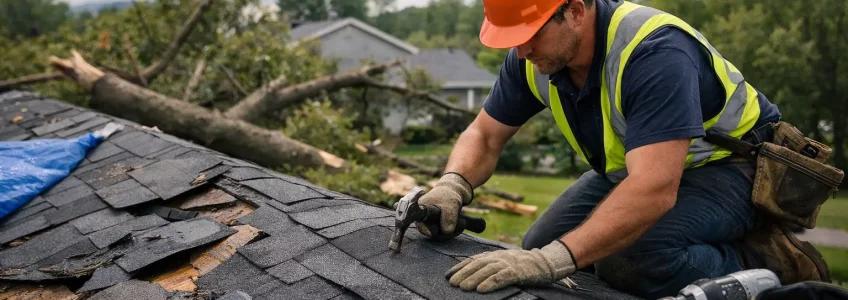
The call usually starts the same way. A homeowner hears pounding hail at night, wakes up to a few shingles in the yard, and wonders whether the roof took a minor hit or a serious one. In Minnesota, that question matters fast. What looks like a small problem from the ground can turn into leaking insulation, stained ceilings, wood rot, and insurance headaches if it sits too long.
Storm damage roof repair is not just about replacing what broke. It is about finding hidden damage early, protecting the rest of the home, and making sure the repair is done well enough to hold up through the next round of wind, hail, snow, and freeze-thaw cycles. For Twin Cities property owners, speed matters, but so does accuracy.
What storm damage really does to a roof
Most homeowners think of storm damage as missing shingles. That is one version of it, but it is rarely the whole picture. High winds can loosen shingle edges without tearing them off completely. Hail can bruise asphalt shingles, crack seals, dent metal components, and shorten the roof’s service life even when the surface still looks mostly intact. Heavy rain can exploit weak flashing around chimneys, vents, skylights, and valleys.
On homes across Minneapolis and surrounding communities, storm damage often affects more than the roofing material itself. Gutters can pull away. Fascia and soffit can take water. Siding, windows, and exterior trim may also be hit in the same event. That is one reason an inspection after a major storm should be broader than a quick glance at the roofline.
The tricky part is that some damage shows up right away, while some takes weeks or months. A water stain on an upstairs ceiling may not appear until after repeated rain. Granule loss from hail may not leak immediately, but it can leave shingles more vulnerable to UV exposure and premature aging. If you wait until there is visible interior damage, the repair can become larger and more expensive.
Signs you may need storm damage roof repair
Sometimes the signs are obvious. You see shingles on the lawn, a branch punctured the roof, or water is dripping into the attic. More often, the warning signs are subtle. You may notice dark spots, dented vents, lifted shingle tabs, clogged gutters full of granules, or a musty smell in the upper level of the house.
After a severe storm, it is worth checking the property from the ground. Look for bent flashing, sagging gutters, fallen tree limbs, and anything unusual around roof penetrations. Inside the home, check attic sheathing for moisture, inspect ceilings near exterior walls, and pay attention to new discoloration or bubbling paint.
That said, not every sign means the same thing. A few blown-off tabs on an older roof may point to broader wind failure. On a newer roof, the issue may be isolated and repairable. Hail marks on soft metal accessories often suggest the shingles were hit too, but the severity can vary. This is where an experienced inspection matters. Guessing can lead to under-repairing real damage or replacing more than necessary.
When repair makes sense and when replacement is smarter
A lot of homeowners want a simple answer: repair or replace. The honest answer is that it depends on the age of the roof, the extent of the storm damage, the material type, and whether matching products are still available.
If the damage is limited to one area and the rest of the roof is in solid condition, a targeted repair can be the right move. Replacing damaged shingles, resealing flashing, repairing underlayment, and correcting leak points may restore the system without the cost of a full replacement. This is often true when the roof is relatively newer and the storm impact was localized.
If the roof is older, brittle, or damaged across multiple slopes, repair may only buy limited time. You can fix one area and still face new failures the next season. There is also the issue of matching. On aging asphalt roofs, replacement shingles may not blend well in color or profile, and some discontinued products are impossible to match closely.
For commercial or multi-unit properties, the decision can be even more nuanced. Flat and low-slope systems may trap water in ways that are not immediately visible, and membrane damage can spread beyond the obvious impact point. A proper assessment should look at the whole roofing assembly, not just the surface.
Why fast action protects more than the roof
The biggest mistake after a storm is waiting too long because there is no active leak yet. Storm damage has a way of widening quietly. A lifted shingle can let in small amounts of water. Wet decking can weaken fast. Insulation loses performance when saturated. Mold risk increases. By the time interior symptoms show up, the job may involve roofing, drywall, paint, insulation, and trim.
Quick action also helps with documentation. If you are filing an insurance claim, it is easier to show storm-related damage when the timeline is fresh and the evidence is intact. Photos, inspection notes, and date-stamped observations all matter. Delays can create gray areas over what came from the storm and what resulted from deferred maintenance.
That does not mean you should rush into major work with the first contractor who knocks on your door. It means you should schedule a professional inspection promptly, get clear documentation, and understand the scope before making decisions.
The insurance side of storm damage roof repair
For many property owners, the roofing work is only half the stress. The other half is the claim process. Policies differ, deductibles vary, and storm claims can get complicated if the damage is partial, older wear is present, or multiple exterior components are involved.
A contractor with insurance-claim experience can make the process much easier. That does not mean anyone should promise a claim outcome they do not control. It means they know how to document damage clearly, communicate the scope, and work with adjusters professionally. That kind of support can save homeowners from missed items, vague paperwork, and preventable delays.
It also helps to have one contractor evaluate the roof alongside gutters, siding, fascia, and other affected exterior components. Storms do not damage homes in neat categories. Coordinated restoration often produces a cleaner result and a smoother process than hiring separate companies to piece things together.
What a solid repair process should look like
Good storm repair starts with a thorough inspection, not a sales pitch. The contractor should check shingles, flashing, valleys, vents, ridge caps, decking concerns, and nearby exterior elements. They should explain what was found in plain language and tell you whether the damage appears isolated, widespread, or borderline.
From there, the plan should be specific. What materials need to be removed? What can be salvaged? Will the repair restore full function, or is it more of a temporary measure on an aging roof? Homeowners deserve honest pricing and honest expectations.
Execution matters just as much as diagnosis. Storm repairs should address the underlying issue, not just the visible symptom. Replacing shingles without correcting damaged flashing or wet substrate is not a real fix. The repair should also account for local weather demands. In Minnesota, that means paying attention to ice and water protection, ventilation, sealing details, and the overall integrity of the roofing system.
Choosing a contractor after a storm
Storm season brings urgency, and urgency attracts the wrong kind of roofer. Homeowners should be careful with anyone using high-pressure tactics, vague estimates, or promises that sound too good to be true. A reputable contractor should be fully licensed and insured, willing to inspect carefully, and able to show a track record in the local market.
Local experience matters in the Twin Cities because the weather pattern is specific and the housing stock varies widely. A contractor working on older homes in Minneapolis may face different flashing details, ventilation conditions, and code considerations than on newer builds in Maple Grove or elsewhere in the metro. Familiarity with the area tends to produce better recommendations and fewer surprises.
This is where working with a long-established company can make a difference. A to Z Construction has built its reputation in the Minneapolis and Twin Cities market by combining exterior restoration expertise with practical insurance guidance and dependable service from a family-owned team. For homeowners dealing with storm stress, that kind of consistency matters.
A practical next step for Twin Cities homeowners
If your property was hit by hail, strong wind, or heavy storm debris, do not rely on appearances alone. A roof can look acceptable from the driveway and still have damage that shortens its life or creates a leak path. Getting it checked early gives you options. Waiting usually takes options away.
A free inspection is often the smartest first step. It gives you a clearer picture of what happened, what needs attention now, and what can be monitored. Whether the right answer is a focused repair or a larger restoration plan, the goal is the same: protect the home, protect the investment, and move forward with confidence instead of guesswork.
After a Minnesota storm, peace of mind usually starts with knowing exactly what your roof is dealing with.